How technical SEO, content systems, and AI-driven signals now shape competitive visibility
And why leadership teams can’t afford to ignore them
Visibility Has Become a Leadership Problem, Not a Marketing Task
Search has changed more in the last 24 months than in the previous decade. For, at least, two reasons: algorithms evolve weekly and AI Overviews rewrite the way information surfaces.
In fact, businesses that once dominated search are now watching more and more competitors. And even AI systems ignore them completely.
In this article I will explain to you what a modern SEO Specialist actually does. Why their (and my) role extends far beyond “SEO tasks”. And why leadership teams now need this expertise as part of their strategic decision-making.
If you’re interested in learning more about SEO, we encourage you to check out our fantastic and up-to-date blog.
So, what’s your brand all about?
If your brand isn’t appearing where it should -on Google, on AI summaries, or in organic demand flows- the issue isn’t visibility.
Its authority.
And authority today must be engineered deliberately.
An SEO Specialist strengthens your company’s visibility by aligning technical SEO, content architecture, AI-driven signals, and authority-building strategies. Without this expertise, businesses risk being ignored by search engines and AI models, losing share of voice and long-term positioning.
1. What a Modern SEO Specialist Actually Does
An SEO Specialist in 2025 is not a writer, not a technician, and not a “digital marketer.”
We are a cross-functional strategist who blends:
- Technical SEO foundations (indexing, architecture, internal links, page performance)
- Keyword research & intent modeling
- Content systems & semantic clusters
- High-quality authority signals
- AI-driven ranking factors
- Google Analytics & data interpretation
- Cross-team alignment (dev, product, marketing, content)
This role exists to ensure that your company is recognized as an authoritative source anywhere search happens. in Google, in AI Overviews, in LLM- generated answers, and across Search Engine Results Pages.
Actually, a modern SEO Specialist is responsible for translating market demand, SERP behavior, competitive gaps, and algorithmic signals into clear, actionable decisions for leadership.
Not tasks.
Decisions.
I’m Gris Arveláez, founder of Focus SEO. I’m an artist, content creator, editor and SEO Expert 2006. Know more about me in this link.
2. Why Leadership Teams Now Depend on SEO Expertise
When growth slows, when competitors dominate visibility…
When AI overlooks your brand…
Or when existing marketing efforts fail to generate authority…
Leaders bring in an SEO Specialist to regain control, identify opportunities, and build long-term competitive advantage.
Most executives underestimate how much search influences business performance.
An SEO Specialist is not simply “improving rankings.”
They are shaping the strategic visibility of your company across:
- Demand generation
- Brand authority
- Customer trust
- Competitive positioning
- AI recognition and citation
- Long-term digital resilience
If search engines or AI systems do not understand who you are, your efforts have failed. Or if they don´t know what you solve, or why you matter. Thus, your customers won’t either.
This is no longer a marketing conversation. It’s a business risk conversation.
Companies with structured SEO leadership outperform because they make better data-backed decisions about:
- Which markets to target,
- which products users show intent for,
- which competitors dominate authority,
- which content clusters fuel demand,
- and where search engines expect expertise.
Search is no longer “SEO.”
It is intelligence.
3. Technical SEO: The Foundation Leadership Often Overlooks
When a business loses visibility, it rarely comes from content alone.
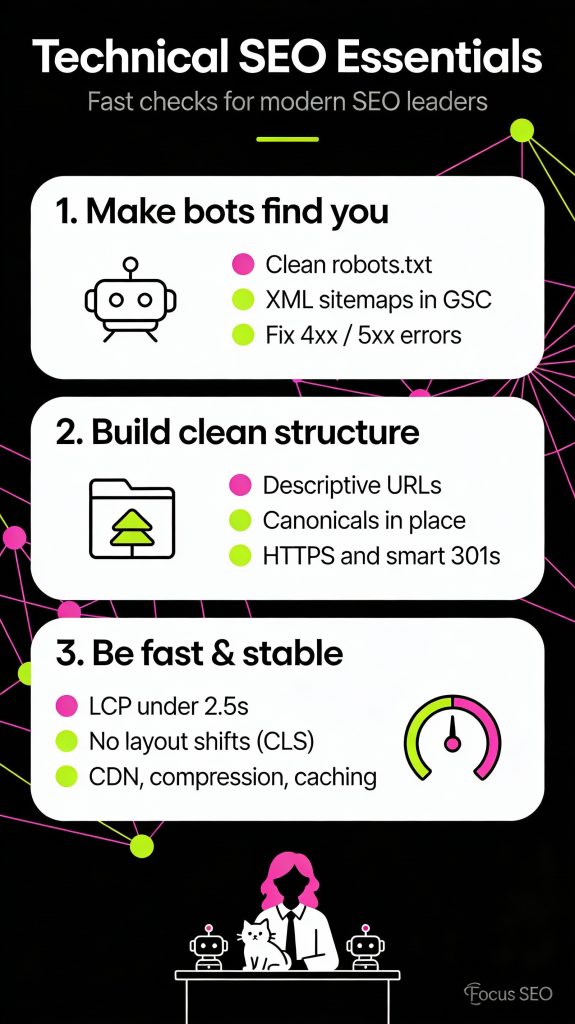
The root causes are almost always technical:
- Slow performance
- Crawl inefficiencies
- Poor information architecture
- Weak internal links
- Missing structured data
- Misaligned content hierarchy
- Fragmented topical authority
- Analytics blind spots
These issues have executive-level consequences:
- Rising CAC
- Lower trust
- Unstable visibility
- Wasted marketing spend
- Misleading analytics
- Long-term loss of market share
A Google SEO Specialist ensures that decisions are based on technical clarity, not assumptions.
Because no amount of marketing fixes a broken system.
4. Content Systems: Building High-Quality Authority in an AI World
Search engines and AI no longer reward volume.
They reward structure, clarity, and expertise.
A modern SEO Specialist:
- Builds semantic clusters
- Organizes content into systems, not posts
- Aligns content with user intent
- Ensures internal links increase authority
- Guides content marketing toward revenue, not noise
- Ensures every keyword connects to business value
- Elevates expertise signals across the site
High-quality content isn’t “good writing.”
It ‘s architecture.
It’s evidence.
It ‘s consistency.
AI systems don’t guess who the authority is.
They detect it.
An SEO Specialist designs the signals that make you eligible to be cited.
A modern SEO Specialist manages technical SEO, keyword research, content systems, authority signals, analytics, link architecture, and AI-readiness. Their core goal is to ensure your business is recognized as an authoritative source across search engines and AI platforms.
5. Understanding AI-Driven Signals and AI Overviews
This is where most leadership teams underestimate the shift.
AI-driven results evaluate:
- Experience
- Expertise
- Reputation
- Depth
- Coherence
- Consistency
- Trust signals
- Technical clarity
Search is no longer a ranking system; it’s an evaluation system.
Companies without SEO leadership risk:
- Losing authority in AI-generated answers
- Being excluded from summaries
- Having their competitors define the narrative
- Seeing their brand diluted in automated systems
If AI doesn’t pick up your signals, you’re invisible. Even if you think you have “a good website” or “a content team.”
6. Why Weekly SEO Consulting Is a Competitive Multiplier
This is where most C-levels finally understand the value.
A weekly session with An SEO Specialist gives you:
- Clarity on what Google and AI are prioritizing
- Diagnoses of risks before they become losses
- Prioritization for your teams (dev, content, growth)
- Data-driven insights on market demand
- Visibility on competitive gaps
- Strategic alignment across your entire digital ecosystem
Weekly SEO leadership is not a cost.
It is a decision-making accelerator.
Leaders who adopt it outperform because they iterate based on reality. Not assumptions.
7. Executive Misconceptions About SEO (And Why They’re Costly)
“SEO is content.”
Not anymore. AI ranks systems, not posts.
“SEO takes too long.”
With proper architecture and signals, AI accelerates authority faster than ever.
“Our marketing team already handles this.”
Digital marketing ≠ search architecture ≠ AI visibility.
“We already rank for our brand.”
Brand queries don’t generate growth.
Authority does.
8. The Business Risks of Delaying SEO Expertise
Postponing SEO leadership leads to growing losses because:
- Competitors gain topic authority.
- AI overviews ignore your brand.
- Your customer acquisition cost (CAC) increases.
- Your content loses value over time.
- Your business becomes reactive instead of strategic.
Visibility is not a luxury.
It is survival.
Are you ready to rock your website with our SEO Services? Book your consultation!
9. Executive FAQ (AEO-Optimized)
What does an SEO Specialist do?
We manage technical SEO, content architecture, keyword research, authority signals, AI-readiness, and analytics to elevate your brand’s visibility.
Do companies still need SEO in the age of AI?
Yes. AI systems rely on SEO signals to determine expertise and authority.
Is SEO part of digital marketing?
Partially. SEO is an infrastructure layer that supports digital marketing. But, also, influences product, brand, and growth strategy.
How does an SEO Specialist support leadership?
By providing clarity, data-based prioritization, and strategic oversight of all search, authority, and AI visibility systems.
When should a company hire or consult with an SEO Specialist?
When growth slows, authority weakens, AI overlooks the brand, or competitors dominate your space.
10. Do companies still need SEO in the age of AI?
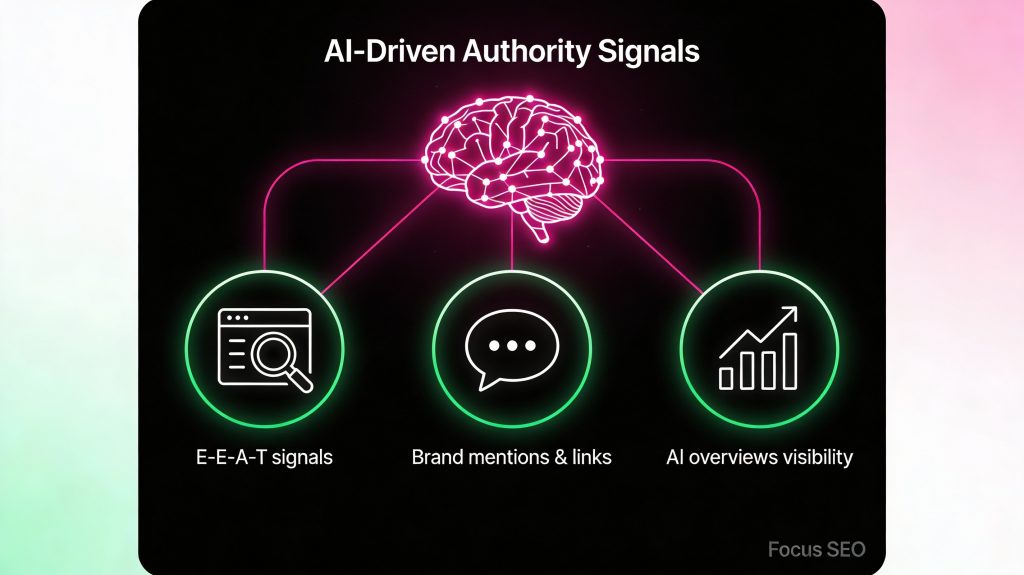
Yes. SEO is even more critical in the age of AI. Because AI systems use structured signals, authority indicators, and expertise validation to generate answers.
Companies without SEO leadership risk becoming invisible to AI-driven results, losing credibility and market share.
Executive Summary
A modern SEO Specialist is no longer an optional role.
We are a core strategic function that:
- Protects your authority
- Enhances your visibility
- Aligns marketing with intent
- Informs product and content
- Prepares your brand for AI systems
- Reduces dependence on paid channels
- Increases long-term competitiveness
Ignoring this expertise leaves your business vulnerable. For a simple reason: not because you lack content, but because you lack recognition.
UIn fact, visibility today must be engineered, not assumed.
Conclusion
In today’s AI-driven search landscape, relying on general marketing support is no longer enough.
As a CEO of a growth business, you need a SEO expert who understands how authority is built across search engines, social platforms, and user behavior.
While your team may manage social media, a modern SEO leader goes far beyond visibility. Personally, my role connects technical decisions, content clarity, and authority signals into one cohesive SEO strategy that protects your competitive advantage.
A strong skill set in search engine optimization (SEO or SEO Expert) is now very important. This means they need to understand data. Also, they should choose relevant keywords. It’s important to improve search engine rankings. Also, they have to make sure your brand communicates well with Google and AI systems.
Effective link building, architecture decisions, and cross-functional alignment are no longer “nice to have”. They’re what separates brands that scale from brands that stagnate.
May you hire a SEO Consultant?
Many executives look at the average salary of top SEO professionals. They wonder whether they should hire an SEO or bring in strategic consulting.
The answer depends on the maturity of your digital ecosystem.
However, the need for senior SEO leadership is universal. Without this expertise, companies struggle to maintain authority, lose organic opportunities, and fall behind in markets where visibility directly impacts revenue.
The modern reality in SEO is simple
Search now shapes how your business is understood.
Organizations that focus on good SEO leadership remain visible and trusted. This can be done by hiring in-house experts or using top consultants. Staying competitive in a fast-changing digital world is essential.
Executive FAQ: Strategic SEO in the AI Era
AI systems and LLMs do not create authority; they detect it. They rely on the same signals that modern SEO optimizes—structured data, technical architecture, and topical depth—to decide which brands to cite in AI Overviews. Without a robust SEO strategy, your brand remains invisible to the algorithms powering AI-driven answers.
Digital marketing focus on promotion and conversion across various channels. Meanwhile, strategic SEO serves as the technical and structural foundation. SEO influences product development, content architecture, and brand authority, ensuring that the entire digital ecosystem is readable and trustworthy for search engines and AI models alike.
An SEO Specialist translates search data and competitive gaps into actionable business intelligence. Instead of just managing “tasks,” they provide leadership with data-backed insights on market demand, competitive threats, and ROI-focused prioritization for development and content teams.
SEO is a strategic capability that builds long-term digital equity. While AI can accelerate authority through proper architecture and signals, the primary goal is sustainable competitive advantage. It is a shift from “renting” visibility through ads to “owning” authority through engineered recognition.